

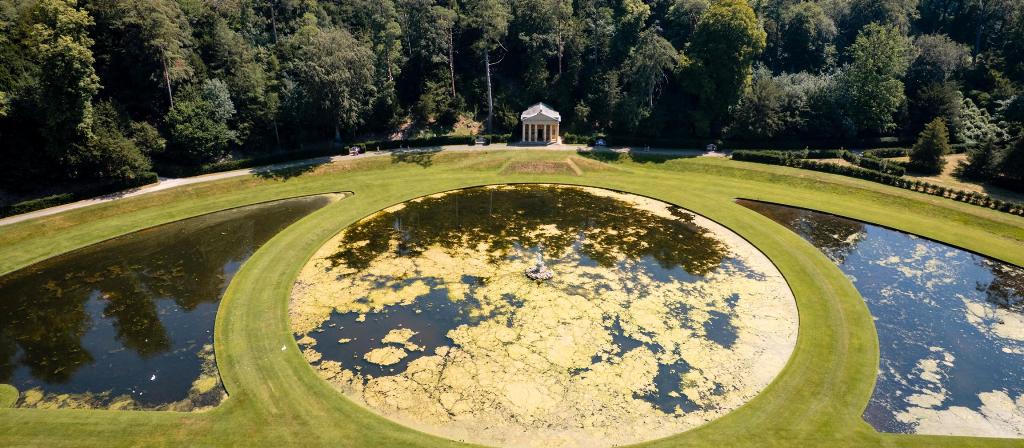
Heatwave affects World Heritage water garden
As the heatwave continues National Trust gardeners have risen to the challenge. The lack of rain and weather extremes are putting water gardens and landscapes under pressure. At National Trust’s Fountains Abbey and Studley Royal Water Garden in North Yorkshire the summer's heatwaves have led to a boom in pond weed in the ornamental ponds, lakes and canals.
The mirror like reflections have been an attraction for visitors since they were created in the 1700s. Described as one of the most magnificent Georgian water gardens ever created.
Removing pond weed is a typical summer job for the gardeners, but this year repeated heatwaves have made it a weekly task. The ponds in the Water Garden are quite shallow, so during periods of hot weather they warm up quickly. These higher temperatures encourage rapid pond weed growth, which can lead to the thick blanket weed seen on the surface. Dressed in waterproofs the team wade in to remove around two tonnes of pond weed each week to help ensure the Georgian ponds can continue to be enjoyed as intended. The weed is removed by hand to minimise any disturbance, then left for up to 48 hours to give insects including dragonfly larvae, frogs and newts time to make their way back into the water before it is removed.
The cascades dotted through Studley Royal Water Garden have also slowed to a trickle because of the prolonged hot, dry weather. In winter due to the impact of more extreme rainfall, the water rushes over the cascades which can result in flooding. National Trust is looking at ways of addressing the drought and flood risks. So that it will help protect the abbey and other heritage features from the extreme temperatures.
In early July another plant took advantage of the heat, with hundreds of pink common orchids appearing for the first time around the historic ruins and riverbanks.
It is thought that Victorian or 18th-century ground works moved topsoil from the riverbank into the large abbey refectory. Orchid seeds within that topsoil may have sat dormant within the ruins before the high temperatures triggered them into bloom. The ground within the abbey has been changed over centuries due to excavation, landscaping and natural processes. That’s what makes Fountains Abbey so compelling as there are still discoveries waiting to be made.
Contact:
www.nationaltrust.org.uk/visit/yorkshire/fountains-abbey-and-studley-royal-water-garden
Photograph: National Trust