

The dark side of the sun
After watching the recent solar eclipse, I was a bit confused about the humans on TV. Some were saying the next one will be years and years away, while others mentioned next year. So what do they all mean? Which ones are correct? I decided to do some research to try and answer the questions I had. Here is an article that should answer some questions and give a clearer picture of what the humans are talking about.
What is an eclipse?
An eclipse is and event that happens when the Sun, Earth, and Moon line up in space so that one object casts a shadow on another.
There are two main categories of eclipses. Solar eclipses and lunar eclipses.
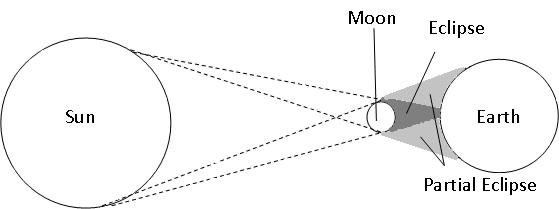
A solar eclipse is when the Moon blocks the Sun.
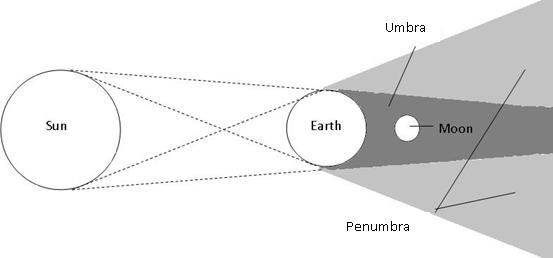
A lunar eclipse is when Earth blocks the Sun's light from reaching the Moon.
There are actually a total of 7 eclipses that occur on Earth. Four of them are part of a solar eclipse and three are part of a lunar eclipse.
The four Solar Eclipses:
Total Solar Eclipse:
The Moon completely covers the Sun because it is close enough to Earth. This turns day into a dim twilight, similar to the near darkness during dusk or dawn. Scientists are particularly interested in a total eclipse as makes it possible for them to study the sun’s outer atmosphere, which is harder to see due to the full glare if the sun.
Total Solar Eclipse frequency:
A solar eclipse occurs on Earth roughly every 18 months globally. However, for any single specific location, a full solar eclipse is very rare and only happens on average about once every 375 to 400 years.
Annular Solar Eclipse:
The Moon is farther away from Earth and looks too small to cover the Sun completely, so it leaves a visible circle of light from the sun which is called the ‘ring of fire’. It leaves a bright ring of light visible around the dark edges of the Moon, known as a "ring of fire". Due to the moon not covering the sun fully, the light remains but in a much dimmer way. Like a really cloudy day.
Annular Solar Eclipse Frequency:
An annular "ring of fire" eclipse happens roughly every 1.5 to 2 years globally. For a single specific location it is roughly 226 years.
Partial Solar Eclipse:
The moon only manages to cover a portion of the sun. The light is only partially affected and the degree it dims will depend on what percentage the moon covers the sun. Sometimes the temperature will drop significantly too, although this will also depend on the percentage that the moon covers the sun.
Partial Solar Eclipse Frequency:
Globally solar eclipses of any type happen 2 to 5 times each
year. For any specific location a partial solar eclipse occurs around once every 2 years and 7 months.
Hybrid Solar Eclipse:
Although eclipses are classed as rare, the hybrid eclipse is the rarest of them all as it requires a very specific movement and positioning of the Earth and the Moon.
The Hybrid Solar Eclipse starts as a Annular Solar Eclipse with a ring of fire and slight dimming of the light, as the moon and earth moves, the moon moves into a full eclipse, sending the light into the much darker twilight.
As the moon and Earth continues to move, the eclipse moves back into the Annular Solar Eclipse.
Hybrid Solar Eclipse Frequency:
A hybrid solar eclipse is a rare event that accounts for about 4.8% of all solar eclipses. On average they occur about once every 10 years.
Observing a solar eclipse:
Observing any solar eclipses will require special glasses or other equipment to actually see the eclipse. Looking directly at the sun during a solar eclipse is extremely likely will damage your eyes as the focused light will burn the back of your retina, which is called solar retinopathy.
The damage may not be immediately noticeable and it can take up to 48 hours for the damage to show. The damage can occur after only a few seconds of looking at the eclipse.
Lunar Eclipses:
A lunar eclipse happens at night during a full moon when Earth moves directly between the Sun and the Moon.
Total Lunar Eclipse:
The Moon travels completely into the dark inner part of Earth's shadow (the umbra). Filtered light through Earth's atmosphere often gives the Moon a dim, glowing red or orange colour. The moon turns a red colour as the Earth scatters the colours with the longer wavelength around towards the moon, the reds and oranges.
Total Lunar Eclipse Frequency:
A total lunar eclipse happens globally once every year or two, but for any single spot on Earth, it is around every 2.5 to 3 years.
Partial Lunar Eclipse:
Only a part of the Moon enters Earth's umbra shadow, covering only parts of the moon.
Partial Lunar Eclipse Frequency:
Partial lunar eclipses happen about once a year on average.
Penumbral Lunar Eclipse:
The Moon passes through the faint, outer part of Earth's shadow (the penumbra). The Moon only dims a tiny bit and it is much harder to notice this type of eclipse.
Penumbral Lunar Eclipse Frequency:
Penumbral lunar eclipses happen several times each decade.