

English Heritage Blue Plaques 2026
A blue plaque is an English Heritage scheme that creates permanent signs installed in a public place to commemorate a link between that location and a famous person, event, or former building on the site, serving as a historical marker to increase interest in local heritage and culture. Nearly 1,000 plaques can be found throughout Greater London. From 1965, the well-known blue circular plaque has been used but there have been various designs and colours used in the past.
English Heritage work with the property owners, and all blue plaques are subject to full owner approval. Written consent must be obtained from the building owner before the plaque can be put in place.
In 2026 English Heritage blue plaques will be unveiled to:
Julia Margaret Cameron (1815–1879):
Julia Margaret Cameron was one of the most significant photographers of the Victorian era, transforming photography into a serious artistic medium. Although she began photographing later in life, Cameron produced a remarkable body of work characterised by soft focus, dramatic lighting and emotional intensity. Her London connections placed her at the heart of a vibrant intellectual circle that included writers, scientists and artists of the period. Her innovative portraits and allegorical images challenged contemporary conventions and continue to influence photographic practice today.
Brigadier Dudley Clarke (1899–1974):
One of the most imaginative military strategists of the Second World War, Dudley Clarke played a pivotal role in developing large-scale deception operations that misled enemy forces and saved countless lives. Working from London and the Middle East, he helped pioneer techniques of psychological warfare and strategic misdirection, most famously through operations that contributed to Allied success in North Africa and beyond. His inventive approach reshaped modern military planning and established deception as a critical component of warfare.
Jill Craigie (1911–1999):
A pioneering documentary filmmaker and writer, Jill Craigie used film as a powerful tool for political engagement and social change. Working in London during and after the Second World War, she directed influential documentaries that addressed housing shortages, labour rights and post-war reconstruction. Her films, including Out of Chaos and Blue Scar, combined artistic ambition with a strong social conscience. Craigie was also a committed feminist and political activist, and her work helped lay the groundwork for later generations of socially engaged British filmmakers.
Kamal Chunchie (1886–1953):
Kamal Chunchie was a tireless advocate for racial equality and community cohesion in Britain. A Methodist pastor of Sri Lankan heritage, he worked extensively in London’s East End, supporting Black and Asian communities and campaigning against racism in housing, employment and public life. Chunchie founded organisations to support people of colour during the inter-war years and the Second World War, offering practical aid and spiritual leadership at a time of widespread discrimination. His work represents an early and often overlooked chapter in Britain’s history.
Dusé Mohamed Ali (1866–1945):
Dusé Mohamed Ali was a pioneering journalist, publisher and political thinker, and a central figure in early Pan-Africanism. Based in London for significant periods, he founded and edited The African Times and Orient Review, the first political journal in Britain owned and edited by a Black person. Through his writing and activism, Ali championed racial equality and solidarity between Africa and the African diaspora. His work influenced a generation of activists and thinkers, including Marcus Garvey, and positioned London as a key hub in global Pan-African networks.
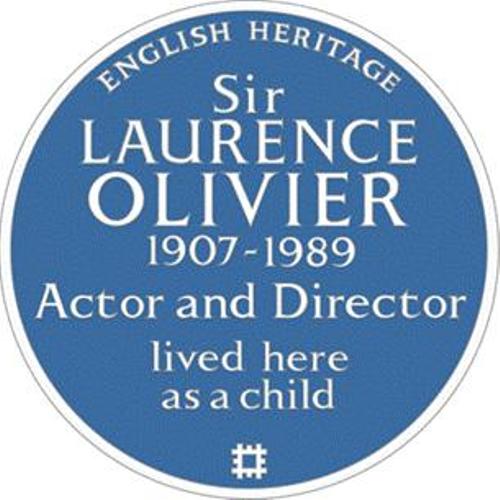
Laurence Olivier (1907–1989):
Widely regarded as one of the greatest actors of the 20th century, Laurence Olivier pursued a career that was inseparable from London’s theatrical life. From his early classical roles to his leadership of the National Theatre, Olivier redefined standards of performance on stage and screen. His portrayals of Shakespearean characters set new benchmarks for emotional depth and technical mastery, while his film work brought British acting to international audiences.
Cecilia Payne-Gaposchkin (1900–1979):
One of the most important astronomers of the 20th century, Cecilia Payne-Gaposchkin fundamentally changed our understanding of the universe. While living and working in London early in her career, she developed the research that led to her revolutionary discovery that stars are composed primarily of hydrogen and helium – a conclusion initially dismissed but later recognised as foundational to modern astrophysics. She went on to become the first woman to earn a PhD in astronomy at Harvard and the first female professor in the university’s Faculty of Arts and Sciences, blazing a trail for women in science worldwide.
Gertrude Tuckwell (1861–1951):
A formidable social reformer, Gertrude Tuckwell devoted her life to improving conditions for working women.
Active in London’s labour movement, she was instrumental in organising women workers, campaigning for fair wages, safer workplaces and access to justice. Tuckwell also broke new ground as one of the first women magistrates in Britain, bringing her commitment to social reform into the legal system. Her work helped secure lasting improvements in workers’ rights and women’s participation in public life.
Stefan Zweig (1881–1942):
An internationally celebrated writer and intellectual, Stefan Zweig lived in London during his exile from Nazi-occupied Austria. During this period, he continued to write fiction, essays, biographies and letters that reflected on European culture, humanism and the devastating impact of war. London offered Zweig temporary refuge and a base from which he engaged with fellow exiles and British intellectuals. His works remain widely read, and offer insight into the cultural and political upheavals of the 20th century.
Photograph: English Heritage