

Tigger's Green Paw
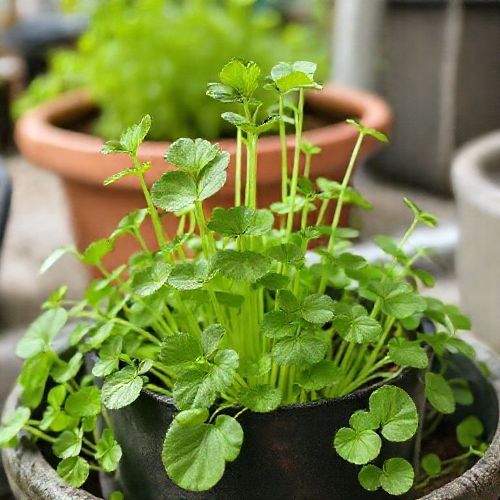
Watercress
Animal Safety: Dogs: Yes Cats: No Rabbits: Yes
Watercress can make cats sick, so it is best avoided by cats.
Dogs and rabbits can eat watercress in moderation.
Lifespan: Watercress is a hardy, semi-aquatic perennial with a garden lifespan of 2–3 years, often acting as an annual or self-seeding in colder climates. It is fast-growing, with a 22-week median lifespan and first harvest at 8 weeks. As a cut green, it has a short shelf life of 2–5 days refrigerated.
Soil Type: Watercress requires consistently wet, nutrient-rich, and heavy soil. Watercress can also be grown on damp paper towel, however, it will not maintain long term growth as it lacks vital nutrients needed to help it grow.
Watercress has been consumed for over 2,400 years, with recorded use dating back to at least 400 BC. Regarded as one of the oldest leaf vegetables, it was utilized by ancient Persian, Greek, and Roman civilizations for its medicinal properties and as a health-boosting food. Watercress contains more Vitamin C than oranges, more calcium than milk, and is packed with Vitamin K.
It thrives in shallow, clear, alkaline, fast-flowing water where it can anchor itself to the ground.
It is found throughout Europe, Asia, North Africa, and North America.
Records date back to 400 BC, when Hippocrates reportedly built his first hospital beside a stream to ensure a steady supply of watercress for his patients.
Watercress (Nasturtium officinale) is one of the oldest known leaf vegetables, originating in Eurasia and the Mediterranean, where it was consumed by ancient Greeks, Persians, and Romans for its peppery flavour and medicinal properties.
Historically it was used as a remedy for scurvy, it became a popular, nutrient-rich "poor man's bread" in 19th-century Britain.