

Tigger's Green Paw
Broad Beans
Animal Safety: Dogs: No Cats: No Rabbits: No
Broad beans can be toxic if eaten raw, and could still cause digestive problems if eaten cooked.
So it would be best to not feed to animals.
Lifespan:
Broad bean plants are treated as annuals. Sometimes a second crop is possible if the plant was grown early enough in the year. Although the second harvest is not as large or successful as the first crop.
Soil Type:
Broad beans like a sunny, sheltered site in rich, free-draining soil. Some varieties can be grown successfully in containers or small plots.
Sowing and harvesting:
Autumn Sowing (Overwintering) October to November
Harvesting Late May to June
Spring Sowing (Maincrop) February to April
Harvesting July to August
(Sow every 3 weeks for longer harvest times)
The leaves are green and in spring the plant produces white flowers with black or dark purple spots.
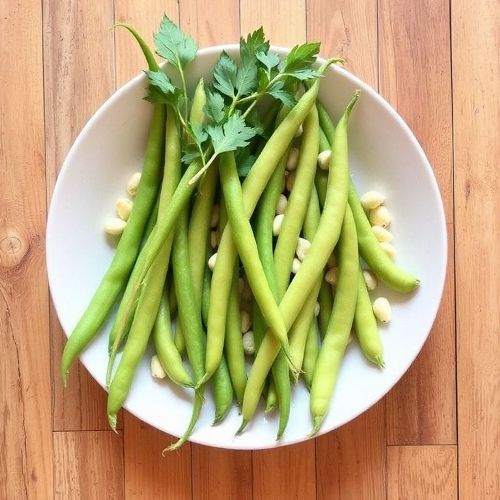
Long thick green pods develop. These pods are lined with a soft downy white interior that protects 3 to 8 large flat broad beans.
Broad beans are one of the oldest domesticated crops in Britain, having been introduced by Neolithic and Bronze Age farmers around 5,000 years ago.
Depending on the variety, broad bean plants can grow around 45cm to 1.2 metres (18 inches to 4 feet). They can support themselves when the pod grow in, but sometimes it is good to support them to keep pods off the ground. The support could be stakes, netting or string.
There are around 30 varieties of broad bean.