

Health Article
- Why do dogs eat grass?
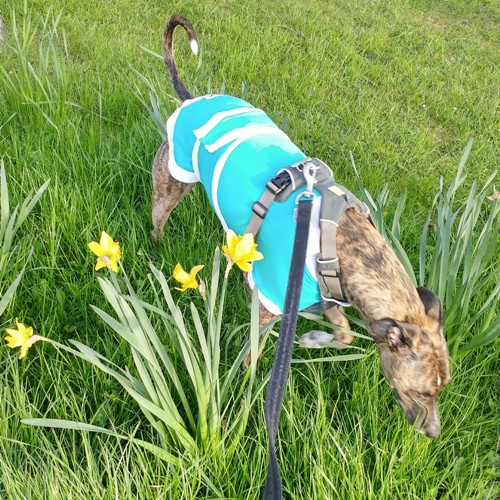
It is a scene familiar to almost everyone. You are relaxing in your garden or enjoying a pleasant walk in the park when you stop begins grazing on the grass like a miniature cow. This results in a look of shock, horror and sheer panic on your human’s face.
Veterinary behaviourists and biologists have studied this phenomenon and discovered the reality is a fascinating blend of evolutionary history, digestive health, and canine psychology.
To understand why a modern dog eats grass, we must look at their wild ancestors, such as wolves and foxes. While dogs are classified as carnivores, they are not obligate carnivores like cats (must eat meat). Dogs are actually facultative carnivores, meaning they eat meat but can digest and thrive on plants.
When scientists examined the poop of wild wolves they regularly find up to 11% to 47% is plant matter, primarily grass.
A common belief among humans is that dogs only eat grass to purposely make themselves throw up when they have an upset stomach. However, many veterinary studies have debunked this as the primary reason. Studies show that fewer than 10% of dogs show signs of illness or nausea before they start eating grass.
Only about 22% of dogs actually vomit after eating grass. If a dog already has a gassy or sour stomach, they might quickly swallow large, unchewed blades of long grass.
The tickling sensation of the rough blades against the lining of their throat and stomach can trigger a vomiting reflex to help them expel whatever was bothering them. But most of the time, dogs eat grass without feeling sick at all.
If it isn’t a parasite purge or an upset stomach, what else could it be? Veterinary nutritionists have two thoughts.
A Need for Dietary Fibre. Grass contains a high amount of roughage and dietary fibre. If a dog's regular diet is slightly low in fibre, they may naturally seek out grass to help keep their digestive system moving smoothly. It acts as a natural prebiotic, aiding their gut microbes.
Boredom and Exploration. Dogs explore the world primarily through their mouths and noses. Young puppies will chew on grass simply because it is an interesting texture. For older dogs, if they are left in a garden alone for long periods, chewing on grass can become a form of entertainment, much like our humans mindlessly snacking while watching television.
Grazing on grass is a completely normal, safe canine behaviour. However, humans should monitor where dogs are eating.
Avoid areas and lawns that have been treated with chemical fertilizers, weed killers, or pesticides, as these are highly toxic.
Public parks where many dogs or other animals gather, can host parasite larvae or disease.
So the next time we stop for a green snack, you don't need to panic. We aren't trying to tell you our food is terrible, nor are we unwell. More often than not, we are simply topping up our fibre intake or enjoying the taste of a fresh morning lawn.