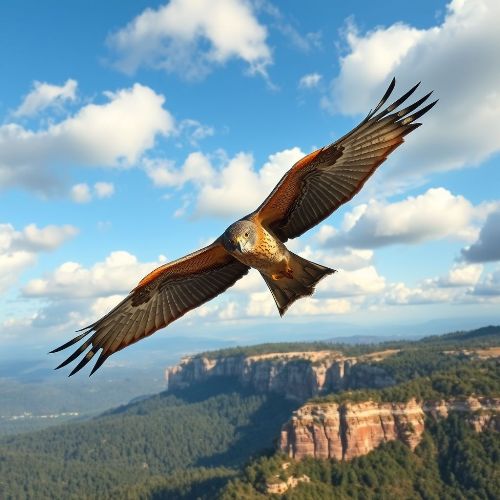


History of... Peregrine Falcon
Name:
Peregrine Falcon
Scientific Name:
Falco peregrinus
Family:
Falconide
Conservation Status:
Least concern
Habitation:
coastal cliffs and mountainous, craggy terrain, open moorlands and urban environments.
Discovery:
Peregrine Falcons have existed for approximately 3 to 8 million years. While only scientifically named in the 18th century, humans have been training peregrine falcons for hunting since around 2000 BC.
Description:
Adults typically have a blue-grey or slate-grey back and long, pointed wings with black tips. Their under parts are white to rusty-coloured, marked with thin, clean dark horizontal bars. They have a dark "hood" and a heavy black "moustache" with a white throat and cheeks. This stripe is thought to reduce glare and help them see better in bright sunlight. They have black eyes surrounded by a bright yellow eye ring. A yellow base to the beak and yellow legs and feet with sharp black talons.
Females are called "falcons" and are about one third larger than males. Males are called "tiercels". They are around 34 to 58 cm (13–23 in) long, with a Wingspan of 74 to 120 cm (29–47 in) and weigh around 330 to 1,500 g (0.7–3.3 lbs).
Behaviour and Social Structure:
Peregrine falcons are solitary and highly territorial predators.
The Stoop is their signature hunting move. They soar to great heights, spot prey from up to 1 km away, and then tuck their wings to perform a high-speed vertical dive. They strike their prey with a clenched foot, often killing it instantly on impact.
Diet and Feeding Habits:
Their diet consists almost entirely of other birds. They focus on medium-sized birds, though they have been documented occasionally hunting bats, small mammals like rabbits and even insects.
Breeding:
Maturing between one and three years of age. Their breeding cycle begins in January or February. They are monogamous and often pair for life, though they will accept a new mate if one dies.
They do not build stick nests; instead, they use their feet to scratch a shallow depression, or "scrape," in gravel or soil on high cliffs or urban structures.
The female lays 3 to 4 eggs. Incubation lasts 29 to 35 days.
Newly hatched chicks, called eyasses, are covered in white down and are completely dependent on their parents for warmth and food. Young falcons begin to fly (fledge) between 35 to 45 days after hatching. After leaving the nest, fledglings remain dependent on their parents for another two months to learn the complex skills required for high speed hunting.
Threats to Population:
Disease, illegal hunting by humans, chick and egg theft, illegal Killing by individuals protecting game birds or racing pigeons.
The rising popularity of drones near nesting sites has been identified as a new source of stress and potential injury for breeding adults.